




The Castle of Giove
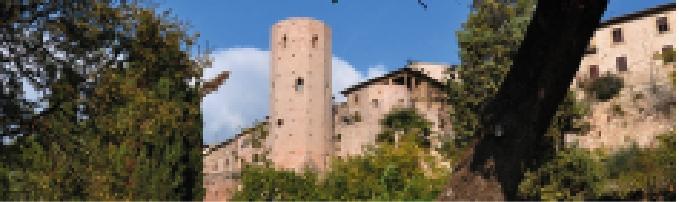
Surrounded by the ancient village that gradually grew around it, the Castle of Giove – also known as the Ducal Palace or Palazzo Mattei – dominates the lower Tiber Valley, offering visitors an exceptional view stretching from Mount Amiata to the Cimini Mountains and Mount Soratte.
A long history lost through the centuries
Probably built on the remains of an ancient pagan temple dedicated to Jupiter (from which the settlement takes its name), the first certain records of the Castel di Jugo, as it was called in documents, date back to 1191. Throughout the 13th century it was contested by the communes of Orvieto, Todi, and Amelia because of its strategic position between Umbria and Lazio. It became the scene of occupations and battles involving powerful feudal lords and noble families, including Sciarra Colonna, the Orsini, the Alviano, and the Anguillara. In 1503 the ancient fortress was almost completely stripped of its defensive structures due to the military intervention of Cesare Borgia.
In the mid-sixteenth century it became a fief of the powerful Roman Farnese family; however, in 1597 Matteo Farnese sold the castle to the marquises of the noble Mattei family, Asdrubale and Cesare. Asdrubale in particular was a great patron of the arts, protector of Caravaggio and patron of the architect Carlo Maderno for the family palace in Rome. He wished to restore the ancient castle as a refined residence and make it his summer home.
In 1643 Pope Urban VIII granted Girolamo Mattei the title of Duke; from that moment, the castle became known as the Ducal Palace. The last Mattei heir was Duchess Maria Anna, who married Marquis Antici of Recanati. Because of this family connection, Adelaide Antici, mother of the poet Giacomo Leopardi, stayed at the palace several times. After changing hands numerous times, the palace belonged from 1985 to 2013 to the American horror film director and producer Charles Robert Band.