



Acera
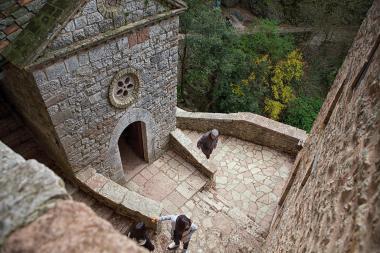
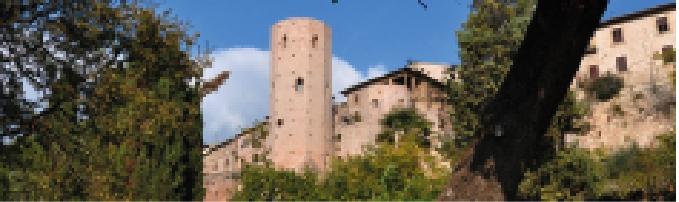
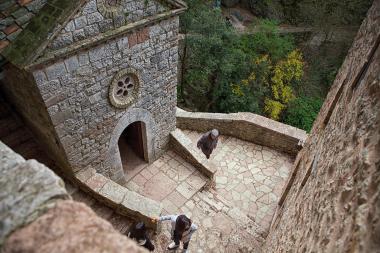
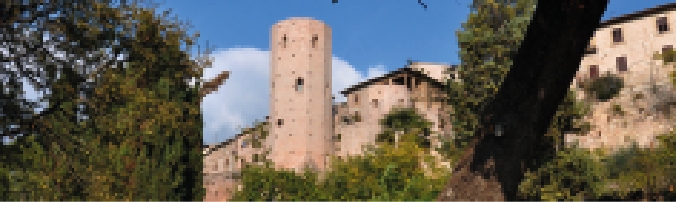
Between the slopes of Monte Maggiore and Monte Grande, at nearly one thousand meters above sea level (972 m a.s.l.), lies Acera, one of the highest hamlets of Campello sul Clitunno. The village, surrounded by oak and maple woods — from which its name likely derives — overlooks the Spina valley from above, along the ancient route that linked the Umbra Valley with the Valnerina.
The road that passes through Acera was once an important transhumance route, used by shepherds and their flocks moving from the winter pastures of the Lazio Maremma to the summer pastures of the Umbrian–Marche Apennines. As early as 1468, the village hosted a small Hospitale, a shelter for shepherds and livestock on the move, evidence of its strategic role in the territory.
Origins
The area of Acera has been inhabited since ancient times: archaeological findings from the nearby fortified settlement (castelliere) of Monte Serano, dating to the Late Bronze Age, attest to a stable presence already in prehistoric times.
The toponym itself may derive from acer, “maple,” once widespread in the woods of this region, or from arx, “fortress,” referring to the fortified nature of the site.
During Roman times, the slopes of Monte Maggiore were crossed by secondary routes connected to the Via Flaminia, linking Spoleto, Trevi and the upper Clitunno valley. However, it was only in the Middle Ages that Acera assumed a stable and recognizable role, becoming a fortified outpost controlling pastures and transhumance routes.