

Exhibition of rural life objects with wooden shelves and a wall featuring the MeCC Museum logo

The MeCC: Ethnographic Museum of Rural Life

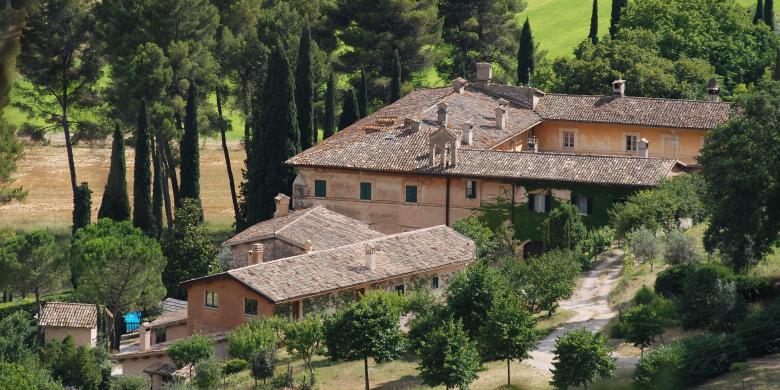
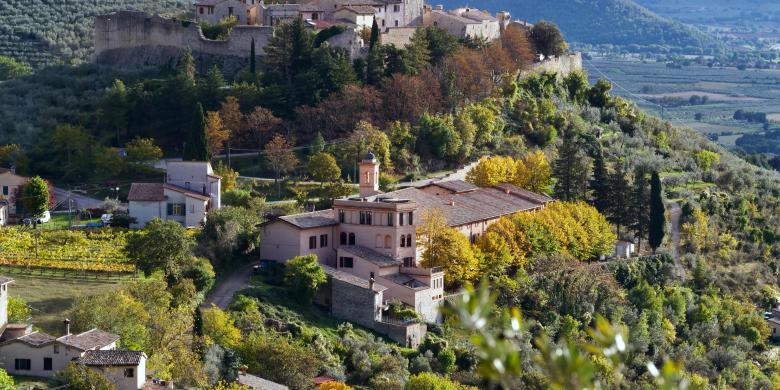
In the heart of Campello sul Clitunno, at the foot of the sanctuary of the Madonna della Bianca, stands Palazzo Casagrande, an elegant 18th-century residence that today houses the MECC – Ethnographic Museum of Rural Life.


Palazzo Casagrande–Chillotti

The building, purchased by the Municipality on 6 June 1980, has a history that reflects more than two centuries of changing ownership and taste. Originally belonging to the Fratellini family of Sellano, who had it built at the end of the 18th century and enlarged the surrounding structures, the palace later passed to botanist Francesco Francolini, who transformed the garden into a small botanical park with exotic species—Lebanese cedars, palms, Atlas pines and even a sequoia—adding an unexpected touch of wonder to the Umbrian landscape.

The palace, imposing yet harmonious, is arranged over three floors. On the ground floor, a large entrance hall paved with local stone and terracotta welcomes visitors with sober elegance; the staircase leads to the main floor, where a large cross-vaulted hall stands out, decorated with neoclassical faux-coffer motifs. The side rooms, embellished with floral decorations and musical instruments, testify to the refined life of a small provincial aristocracy. The paintings, attributed to the Coccia brothers of Norcia, recall those of the nearby municipal palace, created in the same years.

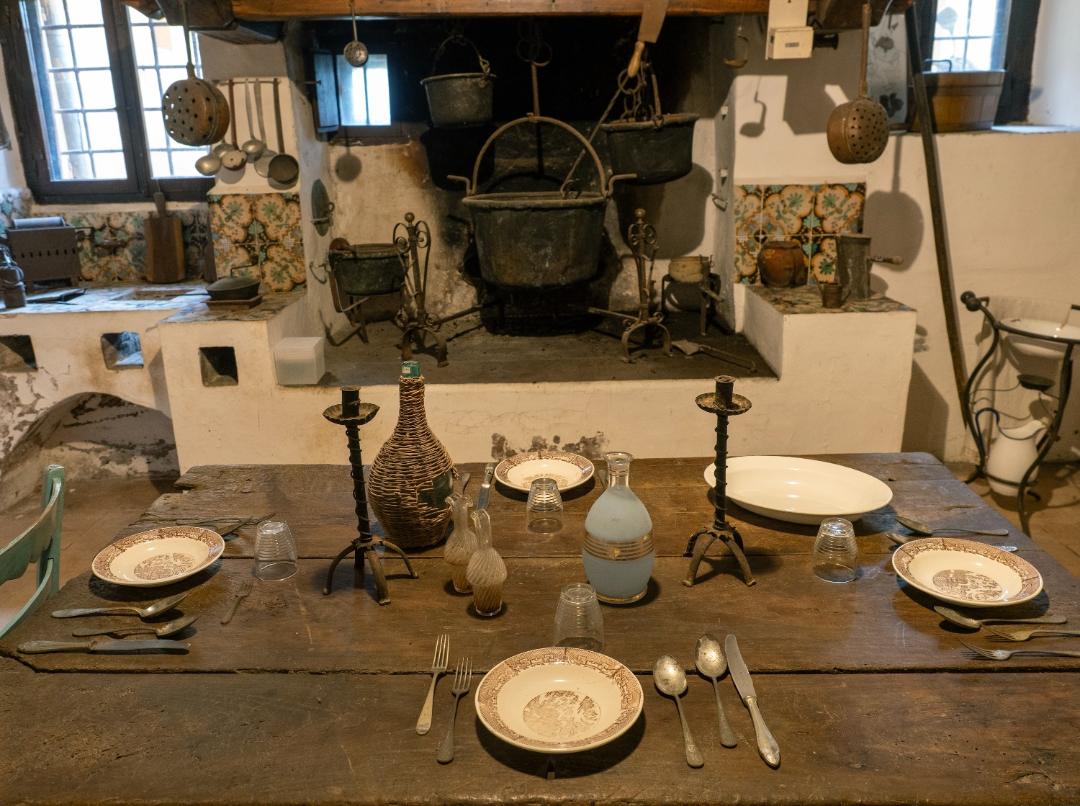
On the lower floor is the kitchen, which still preserves the large 1798 fireplace—the domestic heart of the house—flanked by cellars and cisterns for water collection. In the walled garden stands the structure once used as a lemon house.

The MeCC, a place of memory

Today, within these same rooms, a new soul lives on: the MeCC, a place where the rural memory of the region is revived and renewed. The museum is not just a collection of objects, but a true bridge between past and present, born from the community’s desire to preserve its roots and pass them on to future generations.

The museum rooms host a rich exhibition that narrates, through agricultural tools, photographs and oral testimonies, the everyday life of the Umbrian countryside: ploughs, scythes, presses, hoes and tools for vine and olive cultivation recount the labour and ingenuity of the rural world.

The visit becomes an immersive experience thanks to multimedia installations and interactive viewers that “bring to life” the stories and voices of the past, making the exhibition engaging even for younger visitors.

Alongside material collections, the museum preserves a photo archive and a collection of historic postcards depicting the evolution of the landscapes and villages of Campello. The “How We Were” section documents the changes in customs, trades and social relations, showing how deep the bond between the land and the community once was.

The MeCC is not only a place of memory but also a space for learning and encounter. It hosts educational workshops, guided tours and research programmes on the territory, fostering the transmission of agricultural skills and traditions. The digitization of catalogues and objects has also made the museum accessible online, allowing scholars, students and enthusiasts to explore its collections virtually.

Through these activities, and thanks to the support of visitors, the MeCC affirms itself as the guardian of Campello sul Clitunno’s collective memory, a living museum that not only preserves the past but renews it every day, reminding everyone how rural life remains an essential part of Umbrian identity.

For further information, visit the website of the MeCC of Campello.

Explore the surroundings
Main attractions in the vicinity