





Villa Campello and Its Little Theatre
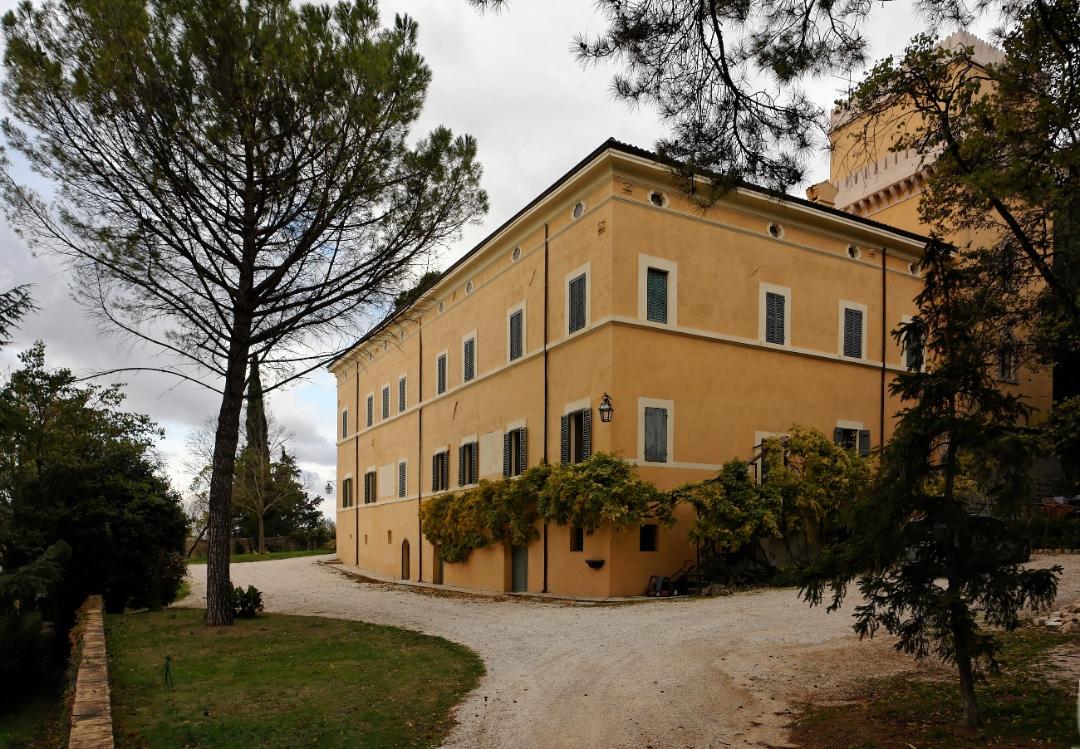
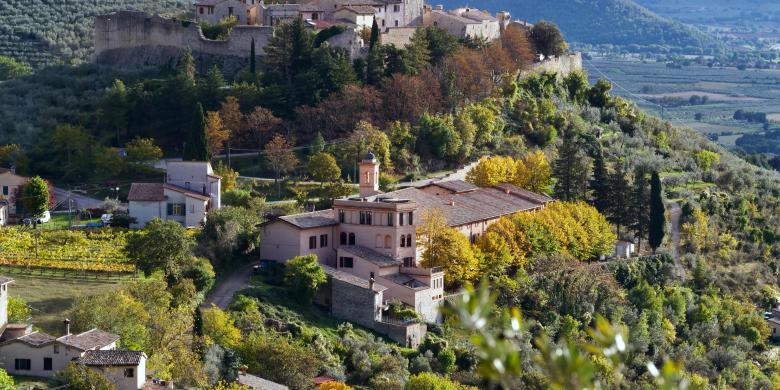
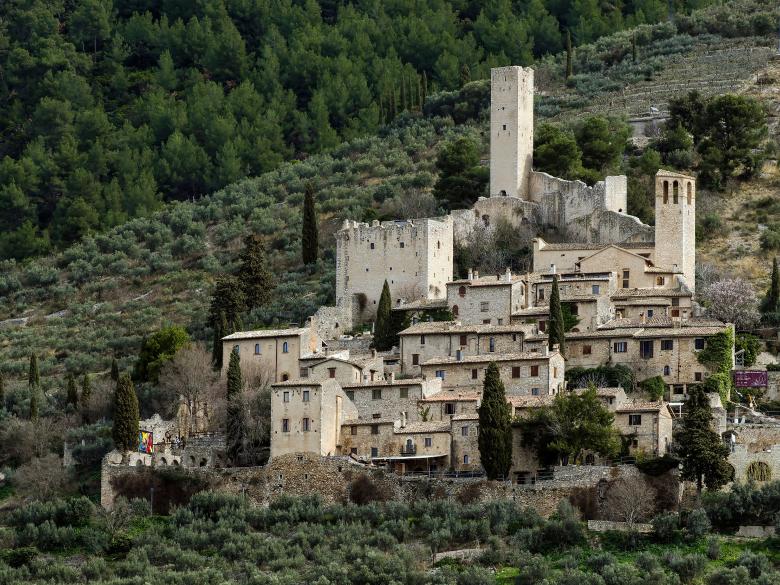
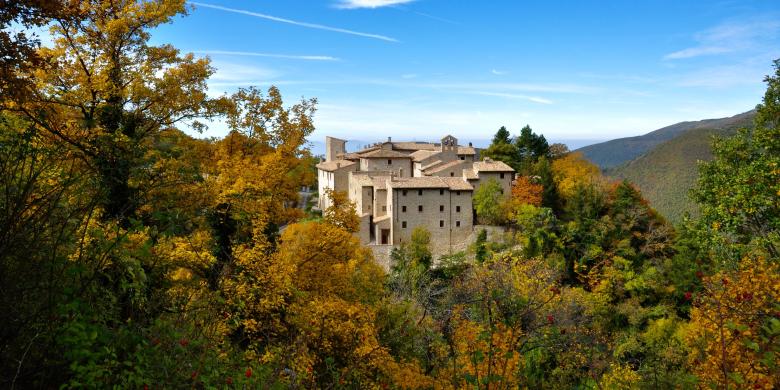
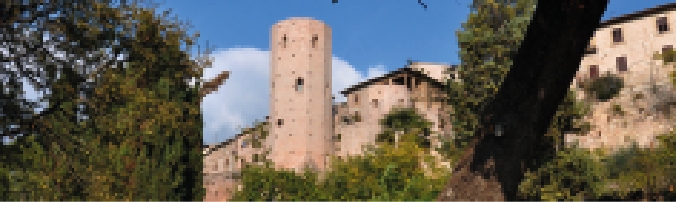
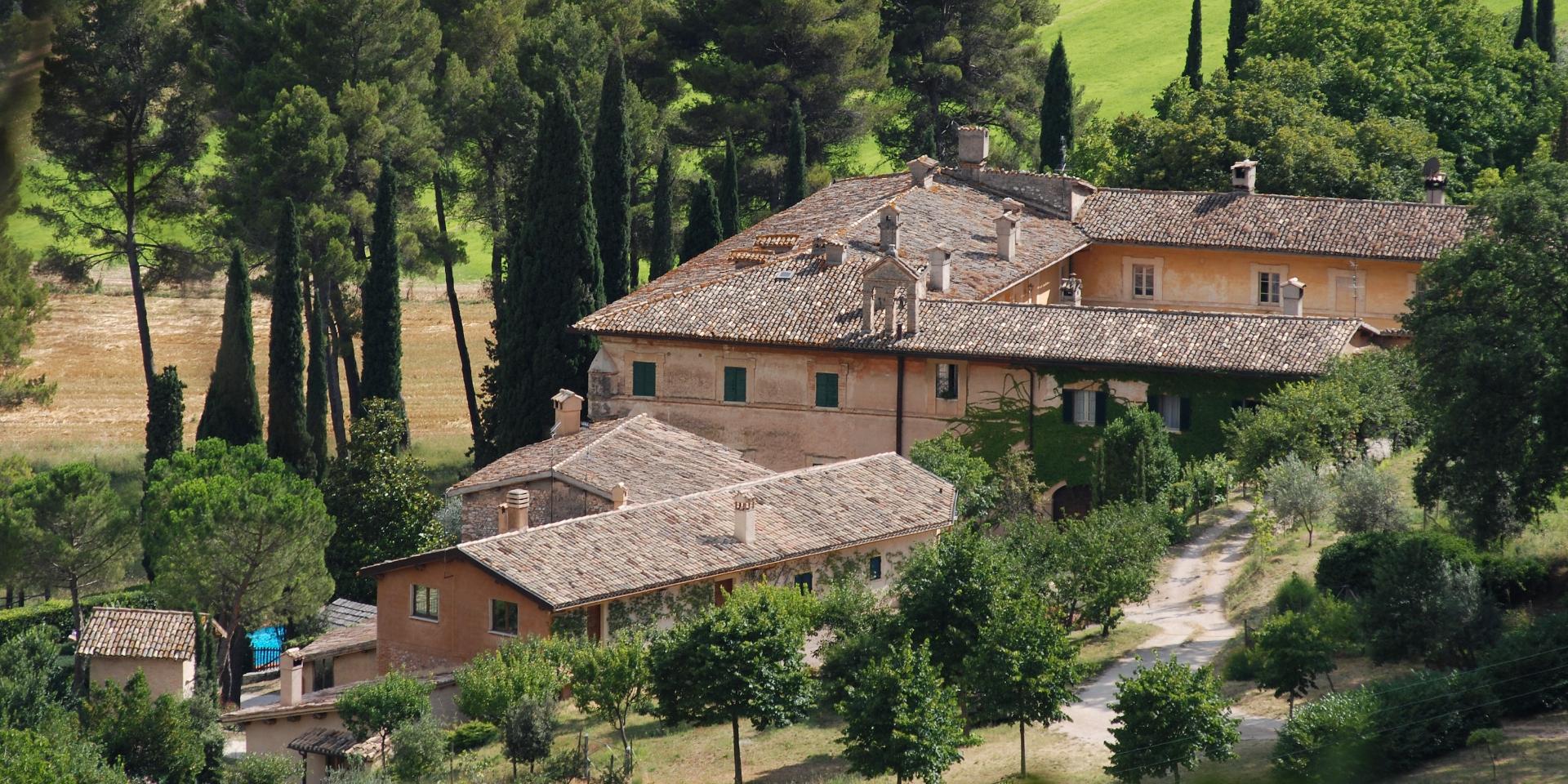
At the foot of the medieval castle of Campello Alto, in a position overlooking the valley and facing Spoleto, stands Villa Campello, the ancient residence of the counts of the same name. The family chose this strategic place around 1347, establishing their home at the edge of the defensive walls, in an ideal spot to maintain contact both with the fortress above and with their town residence in Spoleto, where the counts were required to live by municipal decree.
The original structure was transformed during the 15th century into an elegant rectangular palace with ogival windows, as shown in a drawing by Placido Gabrielli, which records the building’s late medieval appearance. In the centuries that followed, the villa became the heart of the Campello family’s life, alternating with their urban residences and reflecting the tastes of its owners.
A first major renovation took place between 1800 and 1804, when Bernardino Campello (1766–1818), Knight of the Order of Saint Stephen and husband of the Florentine marchioness Beatrice Bourbon del Monte Santa Maria, commissioned architect Pietro Ferrari to expand the villa on the eastern side. The interiors were decorated by painter Vincenzo Floriani, who enriched the rooms with neoclassical motifs and landscape views, transforming the house into an elegant holiday residence.
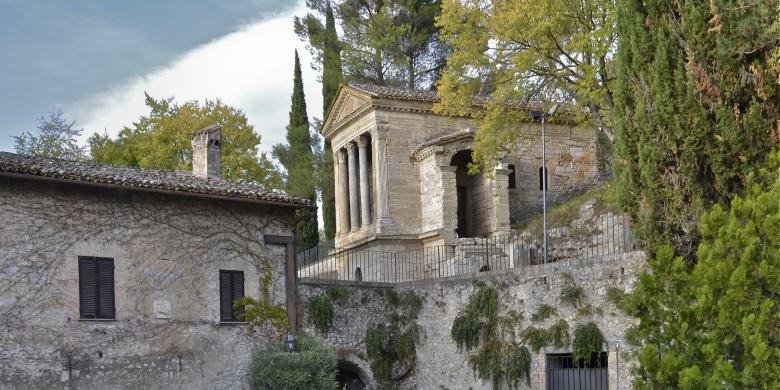
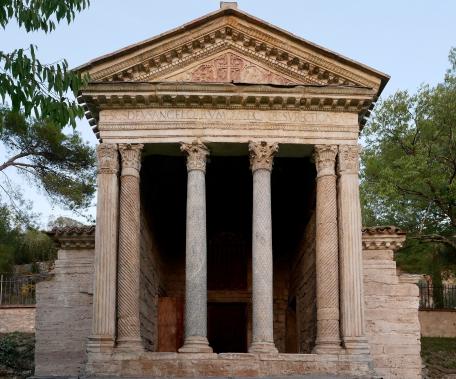
In 1864, Count Paolo Campello, a cultured and cosmopolitan figure, commissioned further works: he built the evocative neo-Gothic crenellated tower, four storeys high and complete with a panoramic terrace, and completely redesigned the surrounding grounds, replacing olive groves and vineyards with holm oaks, cypresses, maritime pines, and cedars of Lebanon. He added to these a boxwood maze, a Swiss-style cottage, a circular henhouse, and a small private theatre: the celebrated Teatrino di Villa Campello.