A castle through the centuries
A supporter of the Empire against the Church during the time of Frederick II, in 1226 Tancredi I Campello captured several envoys of Pope Honorius III, handing them over to Bertoldo, son of Conrad of Urslingen, Duke of Spoleto. Honorius III condemned the inhabitants of Campello, calling them “Children of the Devil.”
At the end of the 13th century, Andrea Campello was among the richest landowners in Spoleto, but in 1300 a violent earthquake destroyed much of the castle.
In 1341 the gonfalonier Pietro Pianciani, appointed directly by the King of Naples, besieged the castle, destroying the dwellings and killing almost all of its inhabitants. Driven out for his cruelty, the castle returned to the hands of Paolo, son of Argento di Campello, who rebuilt it.
Twenty years later, Cardinal Albornoz intervened to strengthen the fortifications, and at the end of the 14th century the Campello family ceded their feudal rights to the inhabitants in exchange for the commitment to pay taxes.
After rebelling against Spoleto in 1522, Campello obtained in 1569 a municipal statute, ratified by the Priors of Spoleto the following year.
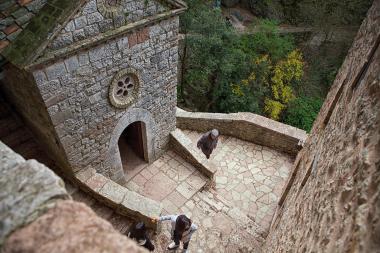
The tranquility brought by municipal independence was interrupted by the raids of anti-French brigands led by Bernardo Latini of Castel San Felice in 1749, who plundered the castle and the nearby monastery of San Pietro before being expelled.
During the 14th century the count Paolo di Campello built, further down the plain, a villa that anticipated the development of residential settlements that grew around the churches of Santa Maria and Santa Maria della Bianca.
Campello Alto remained in the hands of the Counts of Campello until the 16th century, when it became a municipality with its own statute. The town hall remained here until 1887, when it was moved to the new municipal residence in La Bianca.
Monuments in Campello Alto
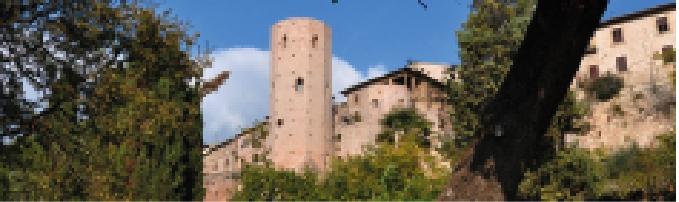
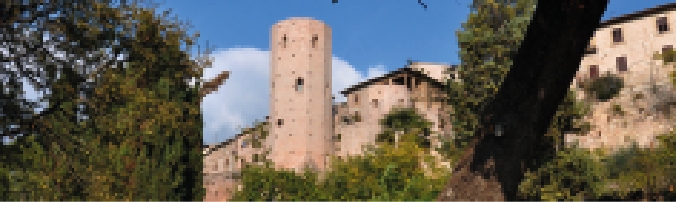
Of the fortified settlement, standing atop a hill dominating the Spoleto valley, one can still admire today the original structure of the castle, with a circular wall approximately 500 metres long, upon which the towers and the only entrance gate are set.
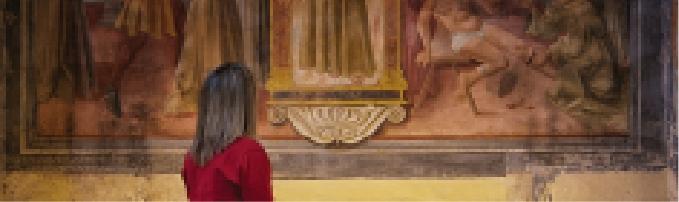
Inside, in the central square, stands the Church of San Donato, built around the 12th century, the earliest known example of Spoleto Romanesque architecture, with 15th-century frescoes.
Outside the walls stands the Convent of the Barnabite Fathers, founded in the 17th century through the merger of two pre-existing cloistered Benedictine convents and purchased by the Barnabite Congregation in 1935, which converted it into a summer residence for their theology students.