

Pissignano
Along the Via Flaminia that leads from Spoleto to Trevi, after passing the hamlet of La Bianca, lies the hamlet of Pissignano, with its important monuments rich in charm and history.
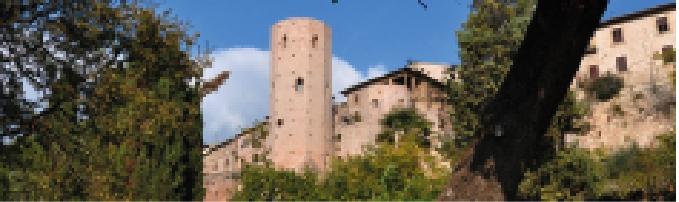
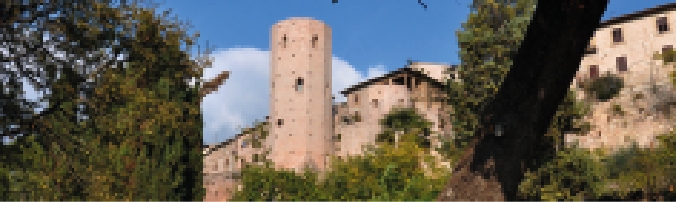
The modern settlement, enlivened each month by the famous Antiques, Second-Hand and Collectibles Market, which attracts visitors from all over Umbria, developed near the Clitunno Springs and the Tempietto sul Clitunno. A little higher stands the ancient medieval castle of Pissignano, perched on the hill that dominates the valley from which it originated.
The place name probably derives from the Latin Pissin-Ianum, meaning “pool of Janus,” whose etymology likely refers to the structures once located near the Clitunno springs, celebrated by Latin authors such as Pliny for their beauty and sacredness.
The birth of the medieval castle
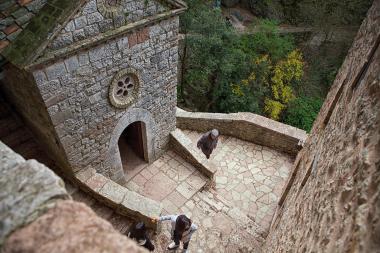
Between the 11th and 12th centuries a primitive inhabited nucleus took shape near the present-day Church of San Benedetto, where a small Benedictine community lived. They were responsible for the construction of the defensive walls that defined the fortified layout of the settlement.
This early nucleus, also known as Colle Revaglioso or Borgo San Benedetto, was distinct from the actual fortress which, according to a tradition difficult to verify, is said to have been built on the western side of the hill by the German baron Sancio, who arrived in Italy following Emperor Conrad II and is considered the ancestor of the noble Sansi family.


