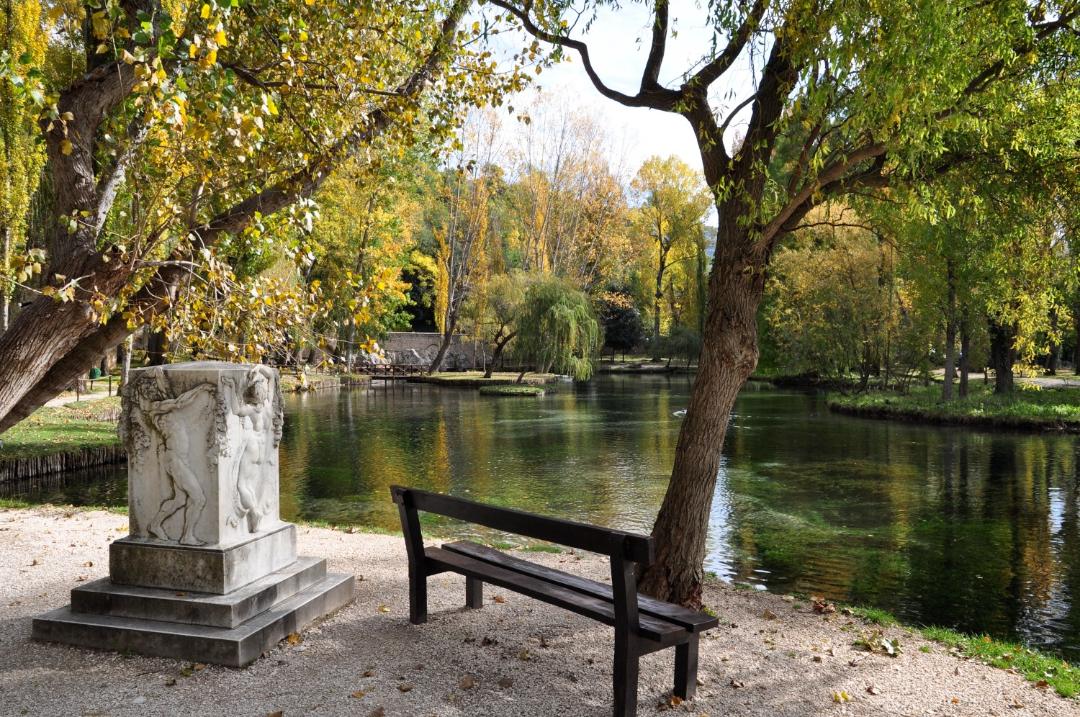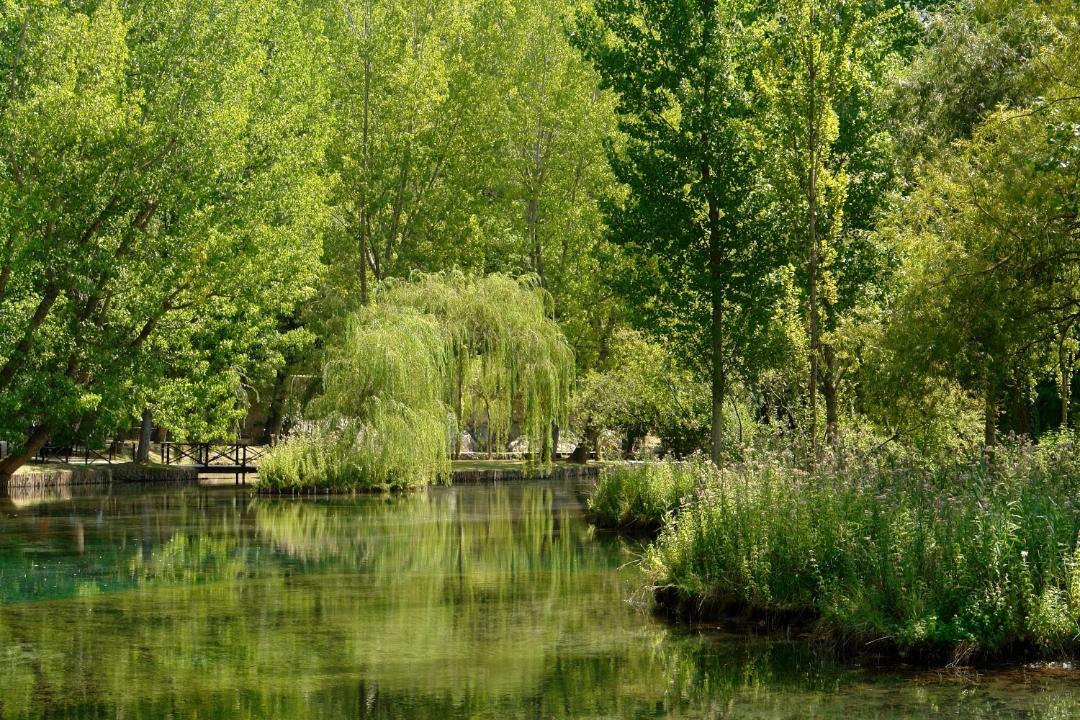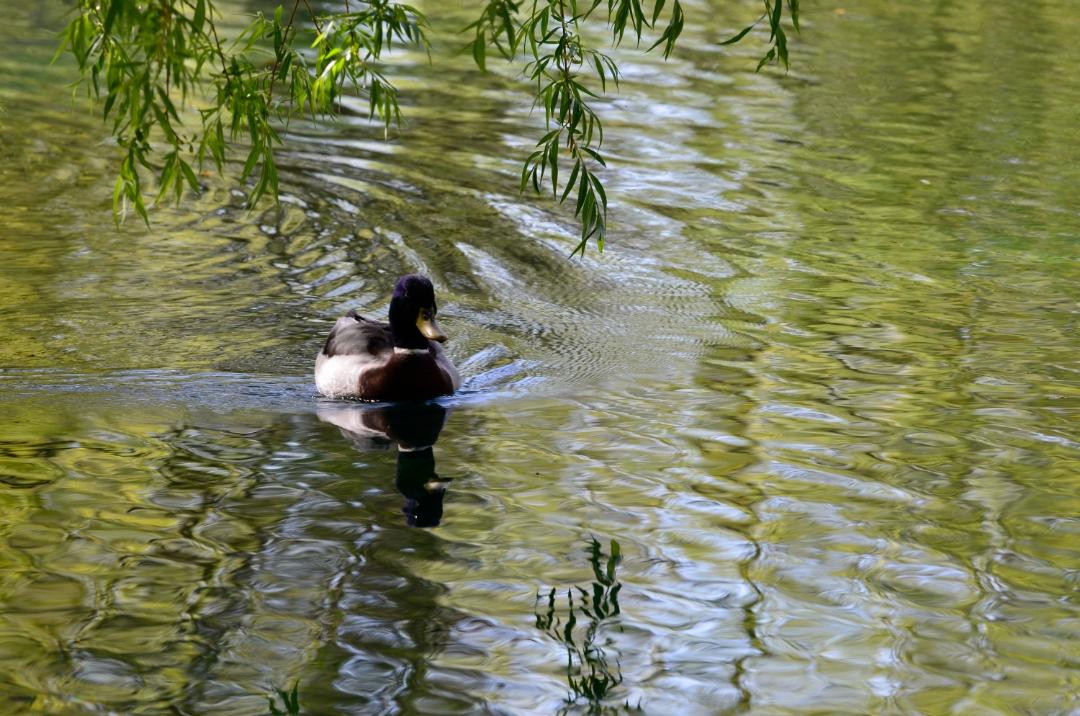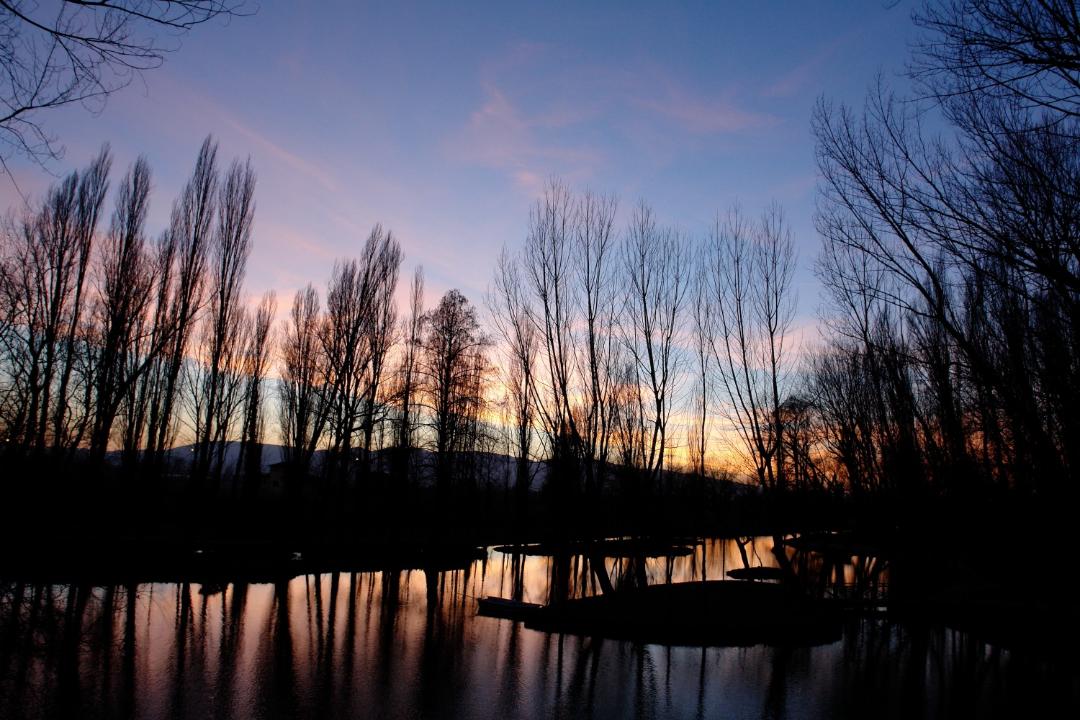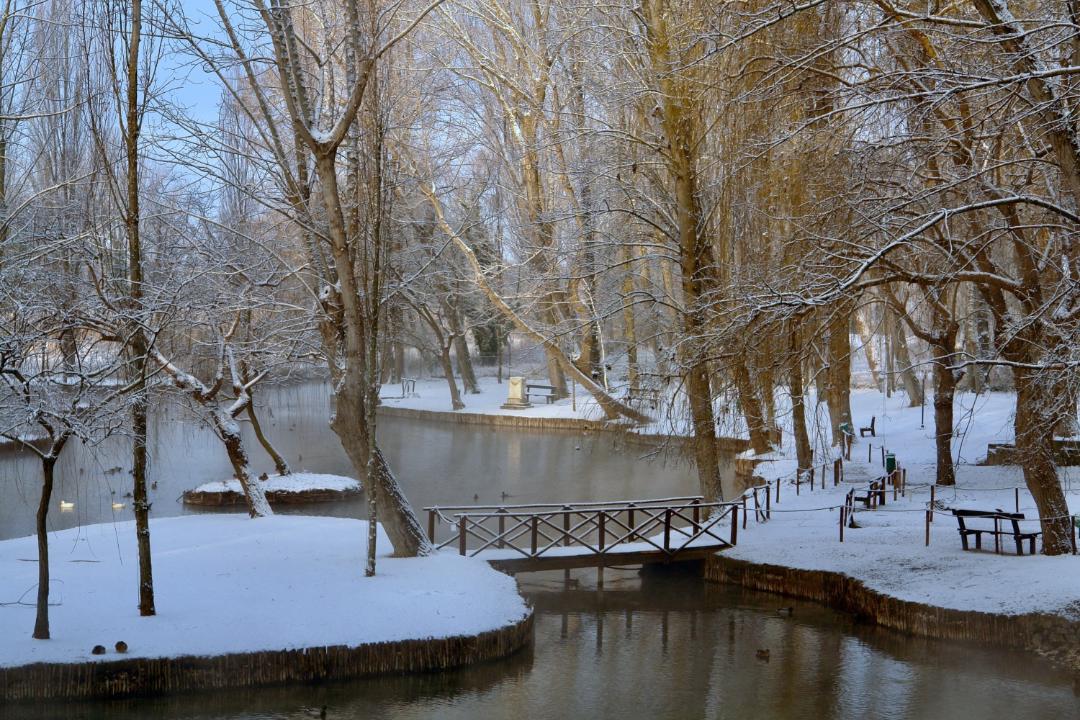



Natural landscape with a clear-water pond surrounded by trees, with two swans swimming in the foreground

The Springs of the Clitunno

The Clitunno River flows through the Umbrian valley between Spoleto and Foligno, running for over 60 kilometers before reaching the Tiber. For centuries, travelers, artists, and poets have celebrated the clarity of its waters and the harmonious landscape surrounding it.

The river’s sources, now known as the Springs of the Clitunno, emerge in the territory of Campello sul Clitunno and represent one of the most enchanting natural corners of Umbria: an emerald-green pool surrounded by poplars, willows, and ash trees reflected in its crystal-clear waters, where nature, history, and myth have coexisted for millennia.

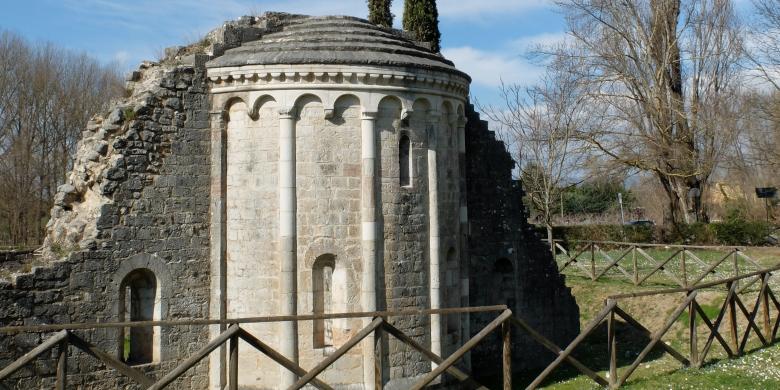
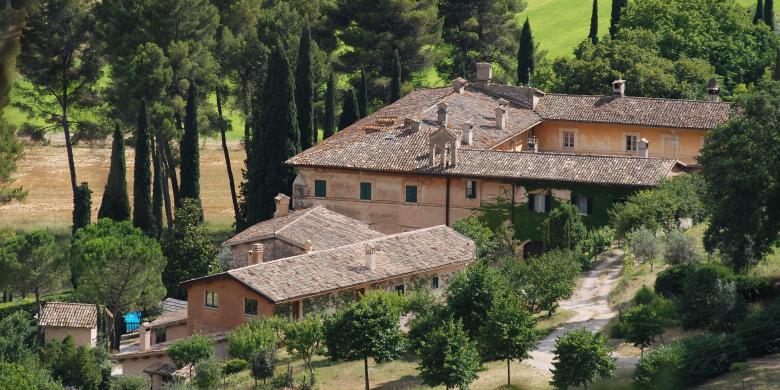
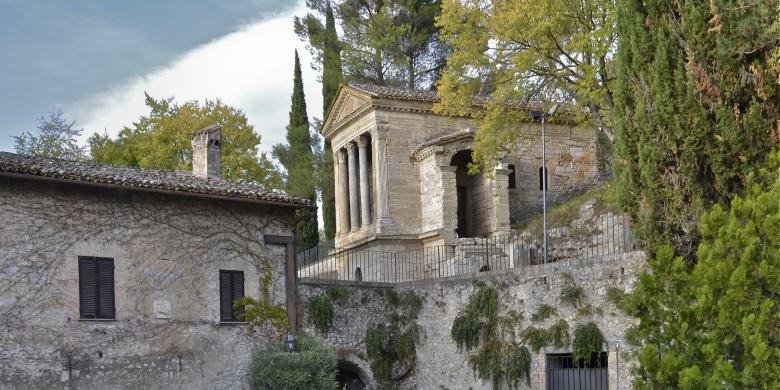
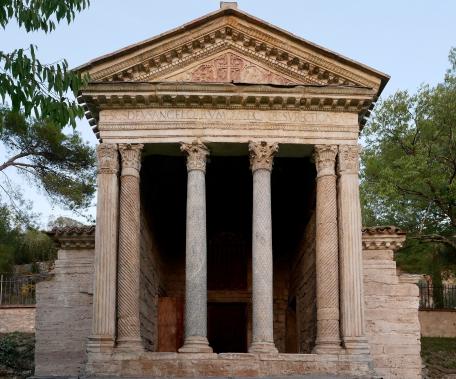
Even today, the Springs of the Clitunno are among the most important spring complexes in central Italy. The silent, suspended atmosphere is the same that fascinated poets and travelers of the past, who were also drawn to the nearby Temple of the Clitunno, a small architectural jewel. Although it is a Christian building of Lombard age modeled after a Corinthian temple, it was long believed to be the true Roman sanctuary of the god Clitumnus. Today the temple is part of the UNESCO site The Lombards in Italy. Places of Power (568–774 A.D.).


The Clitunno River and its springs in ancient times

During the Roman era, the Clitunno and its springs were regarded as a sacred place, guardian of very ancient rites. Here were raised the sacred white oxen of the Clitunno which, taken to Rome, were sacrificed during Triumphs; their pure white coats were believed to derive from the clarity of the waters.

A romantic legend recounts that it was precisely at the river’s source that the wedding between Janus and Camesena, the river nymph and muse of song, was celebrated — a union from which the Italic people were said to descend. The ancient name of Pissignano, Pissin-Ianum, “Janus’ pool”, seems to preserve an echo of this myth.

The springs were praised by Virgil in his Georgics and admired by Pliny the Younger, who, in one of his most poetic letters, lamented discovering such a wonder too late: the spring was so “pure and crystal clear that one could count the coins thrown to the bottom and the shining pebbles”. Its waters, cold as snow, were believed to conceal the mystery of the god dwelling within them.

In Pliny’s time, the springs were so abundant that they formed a great river which, joining the Tiber, was navigable all the way to Rome. Only in 440 A.D. did a violent earthquake radically transform the area, dispersing many of the spring channels.

The sanctuary of the god Clitumnus

In Roman times the springs were consecrated to Jupiter Clitumnus. Numerous shrines and places of worship once stood along their banks, including a grand sanctuary dedicated to the god and connected to a Sacred Grove. It is probably from this lucus that the two famous cippi of the Lex Spoletina originated, today preserved in the National Archaeological Museum of Spoleto.

Inside the temple was venerated the simulacrum of the divinity: a statue with head and limbs made of stone or terracotta, while the body, wrapped in a toga praetexta, was crafted to give the illusion of being alive, almost animated by the spirit of the sacred waters.

The god Clitumnus was especially celebrated during the Clitumnalia, held on May 1st with boat races, banquets, and oracle rites. The god, beyond being the personification of the river itself, also had a prophetic nature: it is not known whether he pronounced oracles through his statue or whether the priests wrote the responses on tablets and then entrusted them to the current so the river could deliver them to the faithful. The power of his oracle became so renowned that, as Suetonius recounts, even Emperor Caligula visited the temple to consult it.

Even today, standing before the Springs of the Clitunno, it is easy to imagine the spirit of Clitumnus still living in those waters — a young, pure, luminous god — guardian of a place where nature and the divine merge into one breath.


A place that has inspired artists and writers

During the 19th century, especially throughout the era of the Grand Tour, many poets and intellectuals praised the beauty of the springs. The historian Thomas Macaulay evokes them in his collection Lays of Ancient Rome, and the English poet Byron mentions them in Book IV of Childe Harold’s Pilgrimage.

Many artists portrayed this enchanting landscape: numerous sketches appear in the travel notebooks of German and English painters, and various 19th-century engravings and lithographs depict the Temple — then in ruins — enchanted by the charm of antiquity immersed in nature. In 1826 the landscape painter Jean-Baptiste-Camille Corot painted the site with touching, romantic tones in his work The Springs of the Clitunno.

During his brief stay in Spoleto, on June 14, 1876, Giosuè Carducci visited the Springs of the Clitunno. He was welcomed with a dinner of flavorful Clitunno trout and Trebbiano wine at the trattoria of Orfeo Lungarotti, but it is said that, upon stepping down from the carriage, he wished to reach the Temple immediately. Sitting on one of the squared blocks of the temple, accompanied only by the gentle sound of the waters, he began to take notes for what would become his famous ode Alle Fonti del Clitunno, composed that same year.


The park of the Clitunno Springs, a treasure chest of biodiversity

In 1852 Count Paolo Campello della Spina created, right near the crystal-clear springs from which the river emerges, a park of about 10,000 square meters with an artificial lake fed by the spring waters. He introduced numerous animal and plant species that still inhabit the area today.

Today the park is rich in walking paths with small bridges and scenic viewpoints offering peaceful spots to admire glimpses of landscape or observe the fauna: tench, trout, carp, and, at times, swans and ducks resting on the shore — perhaps falling asleep together with their ducklings in the shade of an ancient cypress-like poplar.

Explore the surroundings
Main attractions in the vicinity